
Every grade Ceylon has to offer.
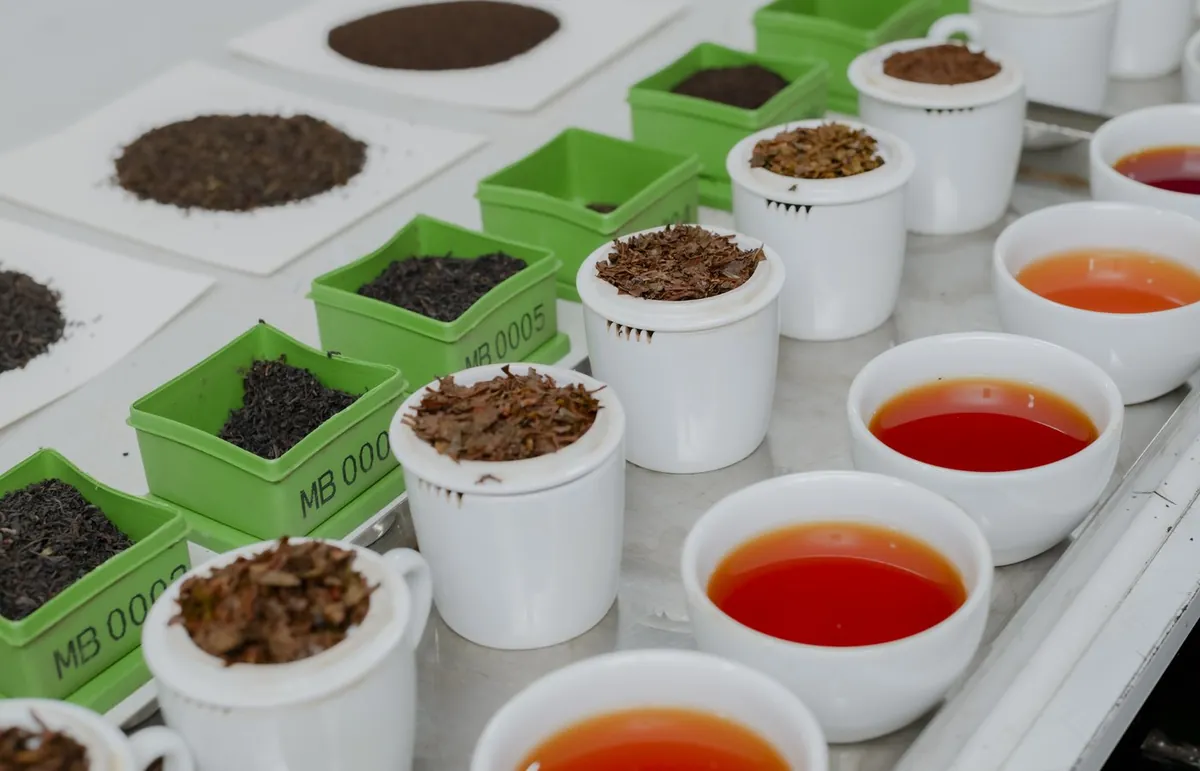
We buy every week at the Colombo auction, where tea from all seven growing regions of Sri Lanka is sold. Send a target cup and we will match it from what is on offer. Pick any tea below to add it to your enquiry.
What Ceylon tea is.
Ceylon tea is tea grown and made in Sri Lanka. The island was called Ceylon until 1972, and the tea kept the name.
It began with the failure of coffee. In 1867 James Taylor planted 19 acres of tea at Loolecondera, near Kandy, two years before leaf rust reached the island's coffee estates and went on to destroy them. By 1883 there was enough tea to hold the first public auction in Colombo. Most of the crop is still sold there, and it is where we buy every week.
Three things make it what it is. Nearly all of it is made the orthodox way, rolled rather than cut, which keeps the leaf intact and gives each grade its shape. It grows from sea level to above 2,000 metres on one small island, so the cup changes completely with the height of the estate. And it is a single origin, regulated by the Sri Lanka Tea Board, which sets the standards every exported tea must meet.
The Lion Logo. The lion on a pack is the Sri Lanka Tea Board's own mark. It can appear only on consumer packs that contain 100% Ceylon tea, are packed in Sri Lanka and meet the Board's quality standard. A brand packed here can carry it; the same tea packed abroad cannot. We apply for it on your behalf. How private label works
Three elevations, three kinds of tea.
Ceylon tea is classed by the height at which it grows. Height sets the temperature and the speed of growth, and those decide the leaf and the cup. It is why the grade alone never settles a blend, and why price moves with where the tea was grown.
High grown
Above 1,200 m (4,000 ft)
Cool air and mist slow the bush down. The leaf stays small and the flavour concentrates, so the liquor is light and bright, from pale gold to orange, with a brisk, fragrant character.
Nuwara Eliya, at around 2,000 m, gives the palest and most delicate cup. Dimbula is golden-orange and mellow. Uva and Uda Pussellawa, on the eastern side of the hills, are a little darker and stronger. Each side has a dry season when quality peaks: about January to March in the west, and July to September in the east.
- Regions
- Nuwara Eliya, Dimbula, Uva, Uda Pussellawa
- Leaf
- Small and neat
- Cup
- Light to medium body, bright, brisk and aromatic
- Used for
- Teas sold on flavour and aroma; adds brightness to a blend
Mid grown
600 to 1,200 m (2,000 to 4,000 ft)
Warmer than the high hills and cooler than the south. The bush grows faster and the liquor gains body: bright, coppery, strong and full. There is less of the pointed flavour of the high estates and more strength.
This is the Kandy country, where Ceylon tea began.
- Region
- Kandy
- Leaf
- A little larger than high grown
- Cup
- Full-bodied, coppery and strong; takes milk well
- Used for
- The body of an everyday blend, in tea bags and packets
Low grown
Sea level to 600 m (2,000 ft)
Heat, humidity and long sunshine make the bush grow fast. The leaf is long, and made the orthodox way it rolls into the black, well-twisted leafy grades the south is known for, the tippy ones included.
The liquor is the darkest of the three: burgundy-brown, strong and smooth, with a malty, sometimes caramel sweetness. About half of Sri Lanka's tea land is low grown, and this is the tea the Middle East buys, for the look of the leaf as much as the strength of the cup.
- Regions
- Ruhuna, Sabaragamuwa
- Leaf
- Long, black and well twisted: OPA, OP, OP1, Pekoe, FBOP
- Cup
- Dark, strong and full; malty rather than brisk
- Used for
- Loose-leaf packets where the leaf sells the pack; strong blends drunk dark, sweet or with milk
The seven regions at a glance.
| Region | Elevation | In the cup |
|---|---|---|
| Nuwara Eliya | High grown, around 2,000 m | The lightest of all: pale golden liquor, delicate and fragrant |
| Dimbula | High grown, above 1,250 m | Golden-orange liquor, mellow and refreshing |
| Uva | High grown, about 1,000 to 1,600 m | Smooth and aromatic, most distinctive in its dry season |
| Uda Pussellawa | High grown | Darker than Nuwara Eliya, medium-bodied, with a tangy edge |
| Kandy | Mid grown, up to about 1,300 m | Bright, coppery, strong and full-bodied |
| Sabaragamuwa | Low grown, sea level to about 600 m | Dark liquor with a reddish tint and a soft caramel sweetness |
| Ruhuna | Low grown, below 600 m | Long black leaf and a strong, full-flavoured cup |
Black tea.
Leaf grades for the pot, smaller grades for the bag.
| Grade | Leaf | Cup | Typically used for |
|---|---|---|---|
| OPA | Long, open, wiry | Light, delicate, pale liquor | Loose-leaf premium packets |
| OP, OP1 | Long twisted leaf | Clean, medium body | Leaf packets, gift tins |
| Pekoe | Tightly curled, short | Rounded, good colour | Middle East loose leaf |
| FBOP, FBOPF | Broken with tip | Brisk, coloury, tippy | Premium blends, pyramids |
| FBOP Ex Special | Extra special, high tip | Full, bright, sweet | Speciality and gift ranges |
| BOP, BOP1 | Broken orange pekoe | Strong, full, quick | Everyday packet tea |
| BOPF | Fannings | Fast, strong, dark | Tea bags, HORECA |
| FGS | Fine dust | Very fast, very strong | Double chamber bags, karak |
Green tea.
From ceremonial matcha to gunpowder and fannings.
Flavoured tea.
Signature blends, and any flavour or combination on request. Send the flavour profile and we will cut a sample.
Tisanes.
Caffeine-free infusions, packed on their own or blended.
Send us a pack and we will cut against it.
A competitor's sample tells us more in one cupping than a page of description.